

Derek Jacobi faced a episode of it while on a global production of Hamlet. Bill Nighy wrestled with it preceding The Vertical Hour premiering on Broadway. Juliet Stevenson has compared it to “a illness”. It has even caused some to take flight: Stephen Fry disappeared from Cell Mates, while Lenny Henry left the stage during Educating Rita. “I’ve completely gone,” he remarked – though he did return to complete the show.
Stage fright can induce the jitters but it can also provoke a complete physical paralysis, not to mention a complete verbal drying up – all right under the lights. So why and how does it take grip? Can it be overcome? And what does it appear to be to be gripped by the actor’s nightmare?
Meera Syal describes a typical anxiety dream: “I end up in a outfit I don’t know, in a character I can’t remember, facing audiences while I’m exposed.” Years of experience did not leave her exempt in 2010, while staging a preview of Willy Russell’s Shirley Valentine. “Presenting a solo performance for an extended time?” she says. “That’s the thing that is going to give you stage fright. I was frankly thinking of ‘running away’ just before press night. I could see the open door going to the garden at the back and I thought, ‘If I fled now, they wouldn’t be able to catch me.’”
Syal gathered the bravery to remain, then immediately forgot her words – but just continued through the fog. “I looked into the unknown and I thought, ‘I’ll overcome it.’ And I did. The role of Shirley Valentine could be made up because the entire performance was her talking to the audience. So I just walked around the scene and had a moment to myself until the script came back. I winged it for three or four minutes, speaking total nonsense in persona.”
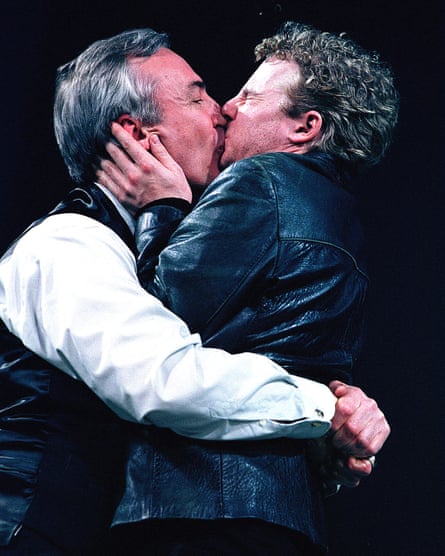
Larry Lamb has contended with powerful anxiety over years of performances. When he began as an beginner, long before Gavin and Stacey, he enjoyed the preparation but performing induced fear. “The moment I got in front of an audience,” he says, “it all began to get hazy. My legs would begin knocking uncontrollably.”
The stage fright didn’t diminish when he became a pro. “It persisted for about 30 years, but I just got better and better at hiding it.” In 2001, he dried up as Claudius in Hamlet, for the Royal Shakespeare Company. “It was the initial try-out at Stratford-upon-Avon. I was just into my initial speech, when Claudius is addressing the people of Denmark, when my words got lost in space. It got more severe. The entire cast were up on the stage, staring at me as I utterly lost it.”
He survived that performance but the leader recognised what had happened. “He realised I wasn’t in charge but only appearing I was. He said, ‘You’re not interacting with the audience. When the spotlights come down, you then ignore them.’”
The director maintained the house lights on so Lamb would have to recognise the audience’s presence. It was a breakthrough in the actor’s career. “Gradually, it got better. Because we were performing the show for the best part of the year, slowly the anxiety went away, until I was self-assured and actively interacting with the audience.”
Now 78, Lamb no longer has the stamina for plays but loves his gigs, delivering his own writing. He says that, as an actor, he kept interfering of his role. “You’re not allowing the freedom – it’s too much you, not enough role.”
Harmony Rose-Bremner, who was cast in The Years in 2024, echoes this. “Self-consciousness and insecurity go opposite everything you’re striving to do – which is to be liberated, release, completely engage in the character. The challenge is, ‘Can I make space in my thoughts to allow the character in?’” In The Years, as one of five actors all acting as the same woman in different stages of her life, she was thrilled yet felt intimidated. “I’ve grown up doing theatre. It was always my happy place. I didn’t ever think I’d ever feel stage fright.”

She remembers the night of the opening try-out. “I actually didn’t know if I could continue,” she says. “It was the first time I’d felt like that.” She coped, but felt overwhelmed in the initial opening scene. “We were all motionless, just addressing into the dark. We weren’t facing one other so we didn’t have each other to interact with. There were just the dialogue that I’d heard so many times, approaching me. I had the classic indicators that I’d had in miniature before – but never to this extent. The sensation of not being able to inhale fully, like your air is being drawn out with a vacuum in your lungs. There is no anchor to hold on to.” It is compounded by the sensation of not wanting to disappoint other actors down: “I felt the responsibility to everybody else. I thought, ‘Can I survive this huge thing?’”
Zachary Hart blames imposter syndrome for triggering his nerves. A back condition ruled out his dreams to be a footballer, and he was working as a machine operator when a acquaintance submitted to drama school on his behalf and he got in. “Standing up in front of people was completely alien to me, so at drama school I would be the final one every time we did something. I stuck at it because it was sheer distraction – and was better than manual labor. I was going to try my hardest to beat the fear.”
His initial acting job was in Nicholas Hytner’s Julius Caesar at the Bridge theatre. When the cast were informed the production would be filmed for NT Live, he was “petrified”. Years later, in the initial performance of The Constituent, in which he was chosen alongside James Corden and Anna Maxwell-Martin, he delivered his opening line. “I perceived my tone – with its strong Black Country accent – and {looked


